Dream Job
ESPN once ran a reality show called Dream Job, where the winner landed a coveted spot as a SportsCenter anchor. I didn't win a nationally televised competition to get my seat at ESPN — instead, I had to make myself stand out as the candidate who could make a difference.
After I left college coaching — my only real professional experience — the process of making that transition was brutal. I got asked countless times in interviews if that was another way of saying I was a gym teacher. Hoo boy.
Fortunately, ESPN saw the experience as unique and a value add, and they decided to take a chance on the unusual candidate. When I got the offer, I felt like I really had landed my dream job. Not bad for a gym teacher :)

Monday Night Lights
These days, ESPN is still a huge sports brand, but it has lost some of its luster – and influence.
To understand the significance of ESPN in the mid-2000s, one of the best examples is the acquisition of Monday Night Football.
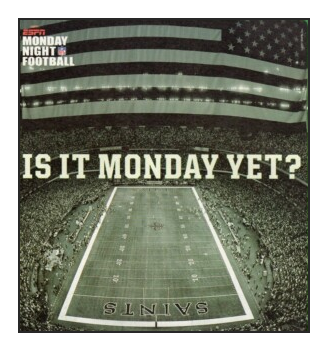
In 2006, MNF left broadcast television for the first time in its history and landed on basic cable. It sounds like a footnote now, given the dominance of subscription-based streaming, but at the time, it was seismic.
I was lucky enough to work on the initiative that helped make having a case of the Mondays a good thing.
Wrong Number, Right Idea
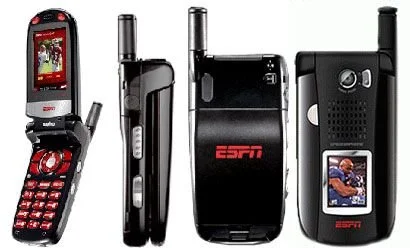
If Monday Night Football showed ESPN's power, Mobile ESPN showed its innovation — even if it was somewhat accidental.
Most pop culture historians grade the sports media brand launching its own phone as a colossal failure. And in terms of the hardware, it was.
In 2006, smartphones weren't mainstream, and the iPhone was still a year away, so the ESPN Phone was a "modern" flip phone built with Sprint and Sanyo, pitched as real-time scores and video highlights for sports fans.
And it bombed, in large part because the monthly mobile plan was really expensive. But underneath the flip-phone flop, ESPN's engineers had built something real: a genuine real-time data pipeline capable of pushing live scores and streaming video over early cellular networks — technology most companies wouldn't attempt on mobile for years.
When the phone died, ESPN didn't throw away the technical infrastructure; the brand pivoted from selling hardware to licensing the technology and the content. A few years later, when smartphones hit critical mass and the App Store launched, ESPN didn't scramble to catch up like everyone else. They were actually years ahead of what would become the mobile video content revolution.
And it was my experience with ESPN's digital and mobile content arms that apparently made me interesting to an unexpected suitor: YouTube.