
Money Matters
After bidding adieu to Twitter, I was eager to lead an entire marketing organization. Wealthfront came calling, and I was initially resistant, as the financial sector didn't appeal to me. But once I heard their story, I was all in.
Wealthfront was founded in the late aughts on two key insights. First, millennials had lost trust in traditional finance after the Great Recession — and for good reason, given the fraudulent practices that gutted the economy and drained their parents' savings.
Second, those still willing to invest were frustrated by hefty advisor fees, especially once they realized most advisors were just plugging their info into software and following its recommendations anyway.
Wealthfront's mission solved both problems by cutting the costly middleman with a low-fee, software-only solution — helping invent the "robo-advisor" category in the process.
Big banks dismissed it at first, then saw where the millennial puck was headed and rolled out their own copycat versions. Wealthfront, once one of only two players in the space, was suddenly one of many. It was time to play offense, which is when I joined as the company's first marketing chief.
More Than Just Millennials
What drew me in: friends who were clients and genuine superfans — rare for a financial brand. But exploring it myself, something felt off — the messaging didn't resonate, the content was intimidating. If my friends loved it this much, there was a real problem worth solving.
My hunch: we didn't understand our customers well enough. We partnered with our data science team to identify our most valuable customer cluster, then ran 300+ deep-dive interviews.
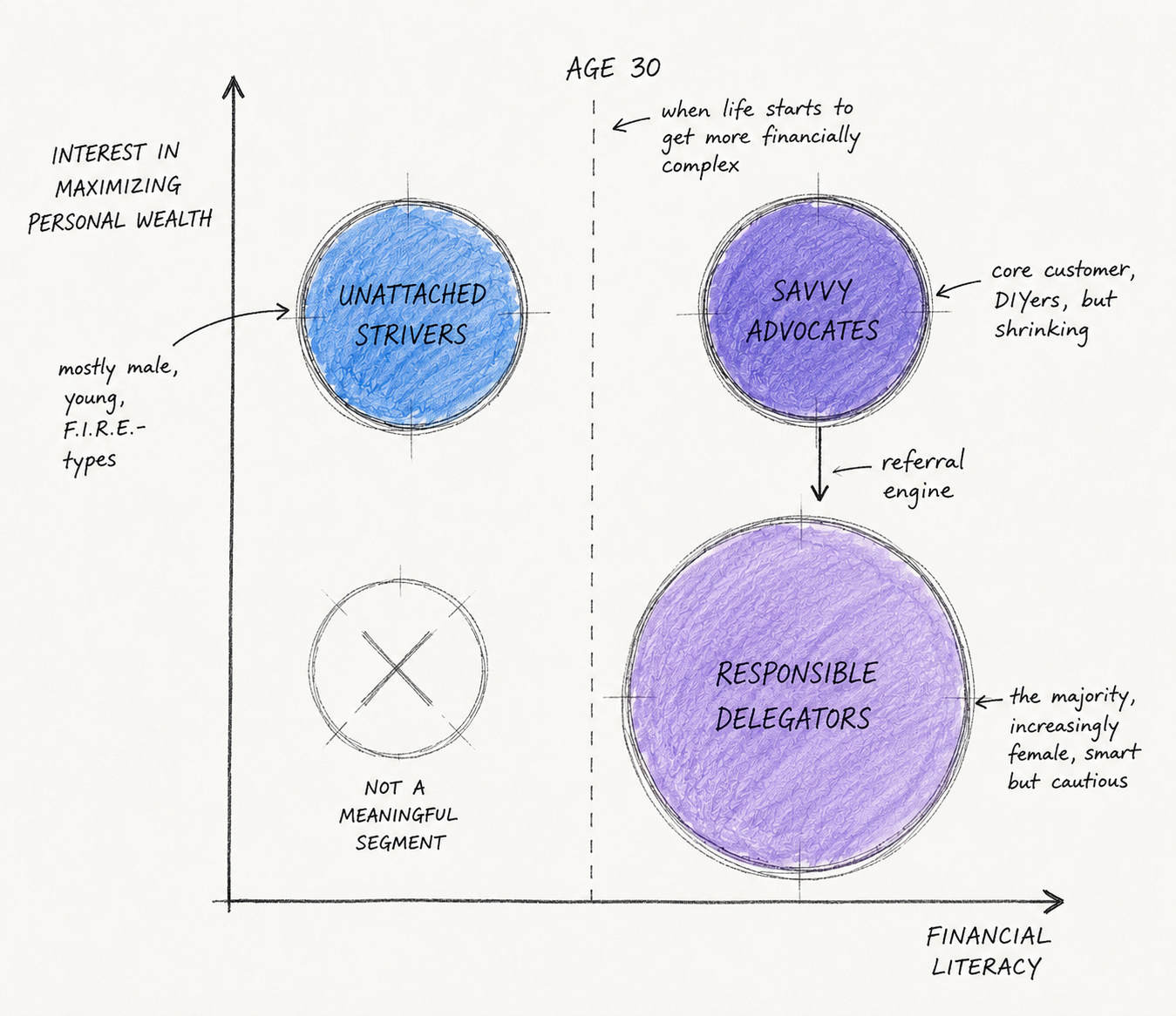
The findings: our core customers were millennials, but "millennial" wasn't specific enough. We landed on "modern traditionalists" — people chasing the same milestones as their parents (a home, their kids' education) but using technology to get there faster. Two factors predicted who'd choose Wealthfront: desire to maximize wealth, and financial "literacy" (how much educational content they consumed).
The surprise: “savvy advocates” — the white paper-downloading, DIYers whom everyone assumed made up the bulk of our customers — had become the minority over time. The majority of our customers were "responsible delegators," more cautious and slower to invest because they didn't want to get it wrong.
So then the question was, how did the responsible delegators get in the door, given our messaging was clearly not for them. Turns out those savvy advocates were advocating our brand — and were a hidden gem of a referral engine.
New Brand, Who Dis?
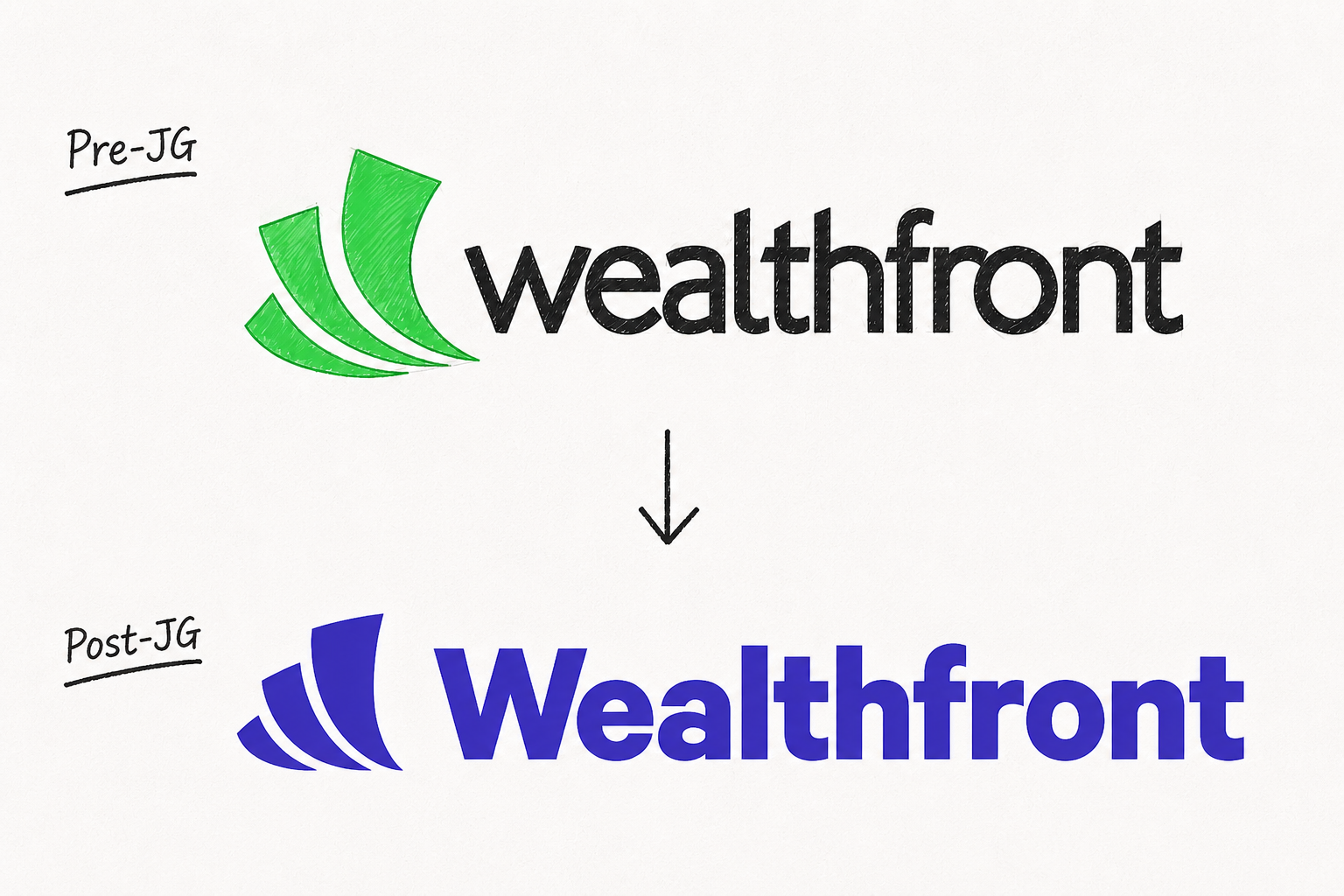
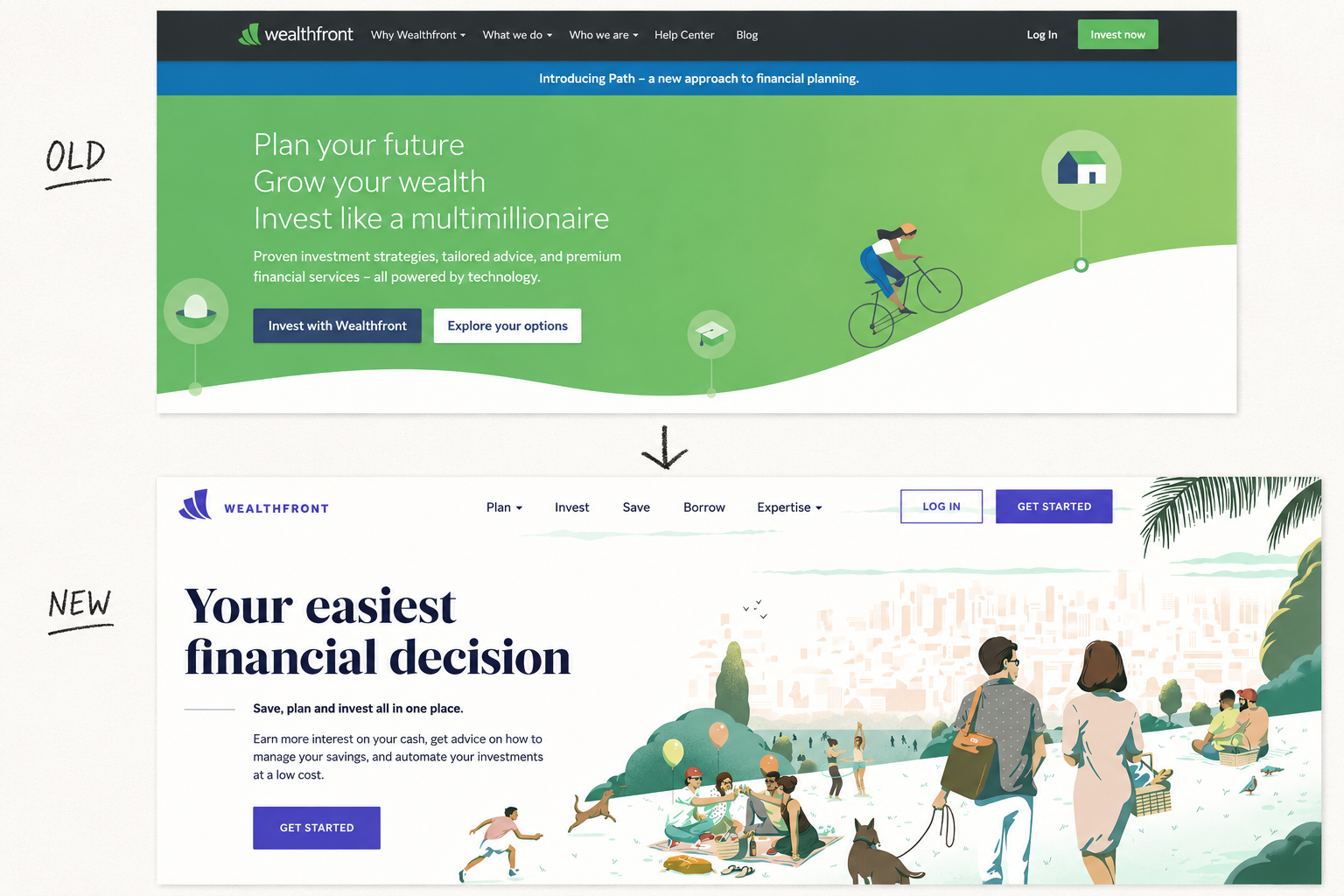
Armed with that intel, we rebuilt the brand. While the logo, fonts, and color palette changed, that wasn’t the point. We needed to change our tune to grow.
The old messaging — "invest like a multimillionaire” and "access to secrets of the wealthy" — was not connecting at all with our audience. Rather than prescribing what people should aspire to, we repositioned Wealthfront as a partner to help customers achieve financial wellness on their terms. "Easy, convenient, low-cost" became the throughline in our hero copy, straight from what both segments told us they valued.
We didn't stop at the website — the same insights shaped our content strategy and product roadmap as we transitioned into a lifestyle brand. Fast Company took notice of our efforts, naming us one of the Most Innovative Companies in 2018.
$age Advi¢e
Wealthfront skipped expensive human advisors, leaning instead on our in-house think tank (including Chief Investment Officer and famed economist Burton Malkiel) to educate customers directly. But the problem was that our content was too advanced — and often intimidating.
So in addition to the website overhaul, we rebuilt the content strategy to be more accessible and — importantly — meet people where they were in life. We softened our tone and focused less on advanced financial theory and more on lifestyle topics and interactive content modules.
One example was our Home Planning Guide, which tied directly to one of our planning products focused on saving to buy a home. The content created different entry points based on where the customer was in their home-buying journey, and the product provided a detailed view on affordability and how the home purchase would affect the retirement timeline.
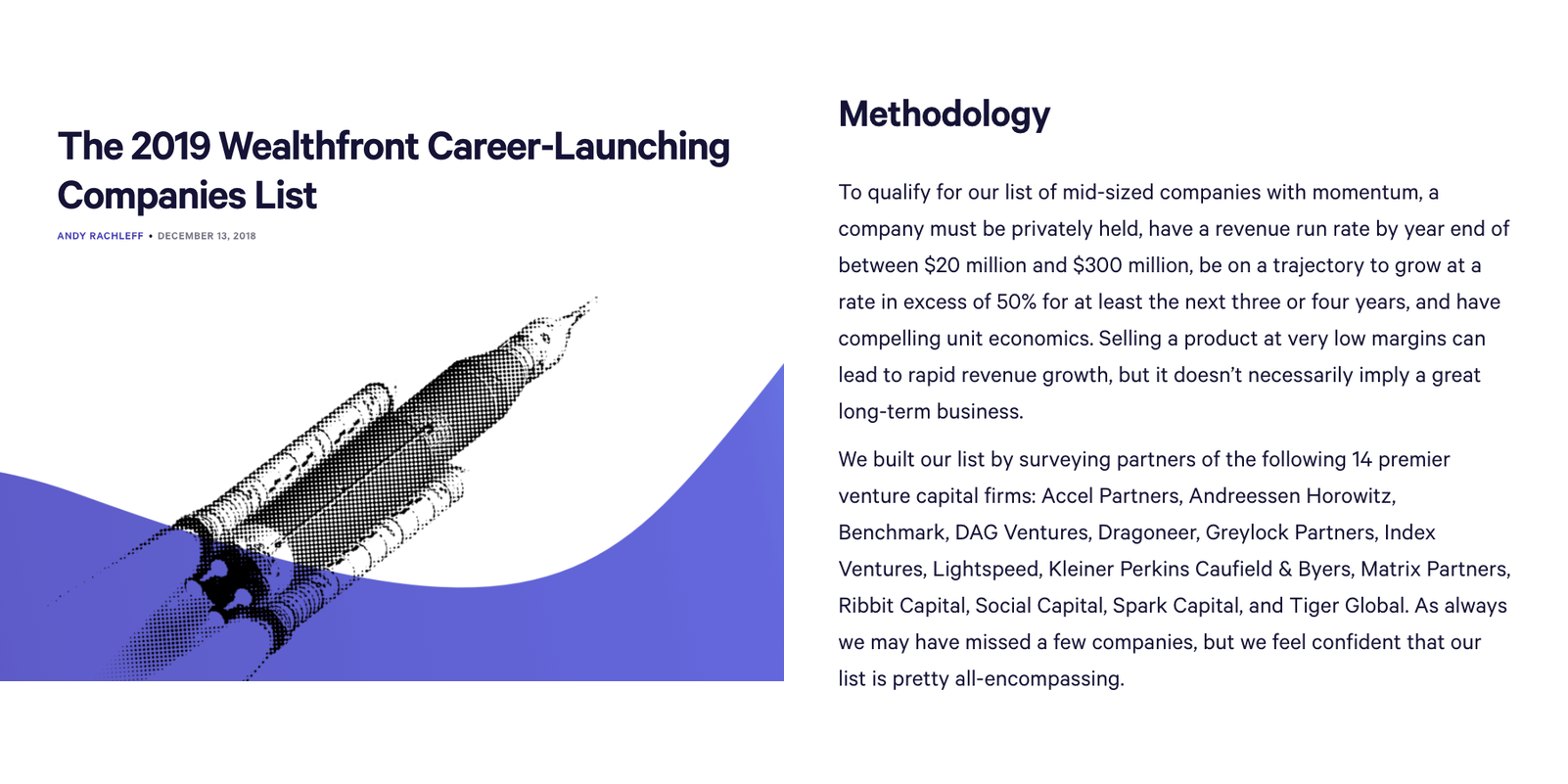
But the most popular content every year was the Career-Launching Companies List, an annual ranking created by co-founder and CEO Andy Rachleff.
Using his own methodology and network of venture capitalists, we produced a list of the best companies to consider for the purposes of wealth building. What started as a blog post several years before became a highly anticipated content experience — and a huge brand differentiator.

3 Swings, 2 Strikes, 1 Homerun
Our research also shaped a new brand vision — Self-Driving Money™️. But this wasn’t just a slogan — it was a brand promise.
The idea was simple: just like with a self-driving car, where you put in your destination, and it handles the rest, Wealthfront could act as a similar “sherpa.” Once a customer establishes their goals, all they have to do next is direct-deposit their paycheck, and the product would handle the rest — from investing to bill pay to savings goals.
But just because you paint a vision doesn’t mean you will achieve it quickly — or smoothly. But you only have so many at-bats to get it right — otherwise, customers will lose faith. And let me tell you, we had some swings and misses.
Strike 1: Risk Parity.
A complex, opt-out investing feature that broke all three of our core values — easy, convenient, low-cost — at once: hard to understand, the feature was opt-out (and it was hard to get rid of it), and it actually added a cost basis. The press hounded us, and customers revolted. We changed the feature to opt-in, sent a mea culpa, and stopped actively marketing it.
Strike 2: “Free" Wealthfront.
Our financial planning tools were beloved inside the product, so we tried unbundling them into a free app as a major top-of-funnel growth driver. But to get any value, you had to link every one of your financial accounts — a big ask for a new user who hadn’t established trust with us yet. But even those who were willing dealt with linking technology that broke constantly. It was a great idea in theory, but didn’t work in practice. We shut it down, though we kept innovating the planning suite for our existing customers.
Homerun: High-Yield Cash Account.
To fulfill our vision, we needed to have banking. And our research showed that, unlike risk parity, customers wanted a place to park their cash that wasn’t the market. A competitive high-yield savings (HYS) account solved three problems at once: 1. It attracted more responsible delegators iffy on investing yet; 2. it expanded share of wallet with existing customers; and 3. it built a moat since customers were more likely to move cash out of the market and into their HYS during turndowns instead of leaving our platform altogether. We launched ahead of competitors, and growth was instant. We added over $1B in AUM in just a few months, a pace that used to take at least a year prior.
So my tenure ended on a high note, adding that critical third leg to the stool that allowed us to take a big step towards realizing the vision. Fast forward to now, and Wealthfront is a public company, and the cash account is still sizzling — and Risk Parity has officially left the building.


